|
To feel the earth's spine. ͏ ͏ ͏ ͏ ͏ ͏ ͏ ͏ ͏ ͏ ͏ ͏ ͏ ͏ ͏ ͏ ͏ ͏ ͏ ͏ ͏ ͏ ͏ ͏ ͏ ͏ ͏ ͏ ͏ ͏ ͏ ͏ ͏ ͏ ͏ ͏ ͏ ͏ ͏ ͏ ͏ ͏ ͏ ͏ ͏ ͏ ͏ ͏ ͏ ͏ ͏ ͏ ͏ ͏ ͏ ͏ ͏ ͏ ͏ ͏ ͏ ͏ ͏ ͏ ͏ ͏ ͏ ͏ ͏ ͏ ͏ ͏ ͏ ͏ ͏ ͏ ͏ ͏ ͏ ͏ ͏ ͏ ͏ ͏ ͏ ͏ ͏ ͏ ͏ ͏ ͏ ͏ ͏ ͏ ͏ ͏ ͏ ͏ ͏ ͏ ͏ ͏ ͏ ͏ ͏ ͏ ͏ ͏ ͏ ͏ ͏ ͏ ͏ ͏ ͏ ͏ ͏ ͏ ͏ ͏ ͏ ͏ ͏ ͏ ͏ ͏ ͏ ͏ ͏ ͏ ͏ ͏ ͏ ͏ ͏ ͏ ͏ ͏ ͏ ͏ ͏ ͏ ͏ ͏ ͏ ͏ ͏ ͏ ͏ ͏ ͏ ͏ ͏ ͏ ͏ ͏ ͏ ͏ ͏ ͏ ͏ ͏ ͏ ͏ ͏ ͏ ͏ ͏ ͏ ͏ ͏ ͏ ͏ ͏ ͏ ͏ ͏ ͏ ͏ ͏ ͏ ͏ ͏ ͏ ͏ ͏ ͏ ͏ ͏ ͏ ͏ ͏ ͏ ͏ ͏ ͏ ͏ ͏ ͏ ͏ ͏ ͏ ͏ ͏ ͏ ͏ ͏ ͏ ͏ ͏ ͏ ͏ ͏ ͏ ͏ ͏ ͏ ͏ ͏ ͏ ͏ ͏ ͏ ͏ ͏ ͏ ͏ ͏ ͏ ͏ ͏ ͏ ͏ ͏ ͏ ͏ ͏ ͏ ͏ ͏ ͏ ͏ ͏ ͏ ͏ ͏ ͏ ͏ ͏ ͏ ͏ ͏ ͏ ͏ ͏
Hello there!If you’re new, welcome. If you’ve been here before, yay. I love February in Perth because it feels strong and certain. In Bunuru, the heat comes in fat splashes as if the sky is wringing out the last drops of summer. To live is a momentous adventure: He loved, beneath all this summer transiency, to feel the earth's spine beneath him; for such he took the hard root of the oak tree to be; or, for image followed image, it was the back of a great horse that he was riding; or the deck of a tumbling ship... — Virginia Woolf
Speaking of great horses: gong xi fa cai! Click click, saddle up, see you on the moon, friends. I hope your Lunar New Year/Ramadan/Lent is off to a marvellous start. 🍊
|
Meanwhile in editingWith the lunar calendar having just heralded the Year of the Horse, it’s a fine moment to reflect on collateral adjectives. Let’s start with their opposite. Derived (or denominal) adjectives are adjectives created from nouns. For example, the adjectives speedy 🐆 and cheesy 🧀 relate to the nouns speed (hasty) and cheese (tasty). They share the same root word, and the adjective is constructed from the noun.
|
|
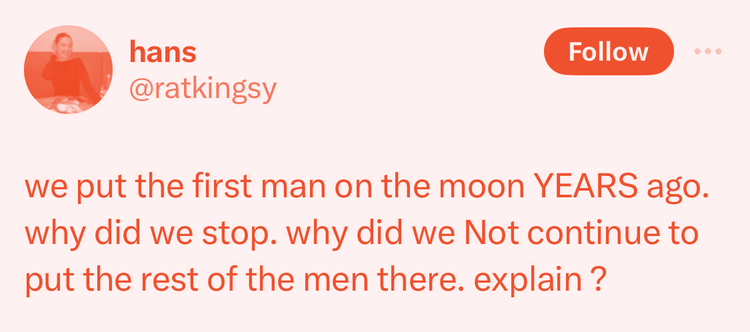
Collateral adjectives (a term credibly attributed to a credulous ex-priest called Mr Funk) relate to a noun but don’t share its root. Often, the adjectival form comes from Latin, while the noun is frequently Old English. Hence, in the Lunar New Year, lunar comes from Latin (lūna), but moon comes from Old English (mōna). Year of the Horse is from Old English (hors), but if you were to describe an equine year, it would come from Latin (equinus). Appetite whetted? Here’s a list of a couple of hundred more examples to delight and pleasure. 🐴
|
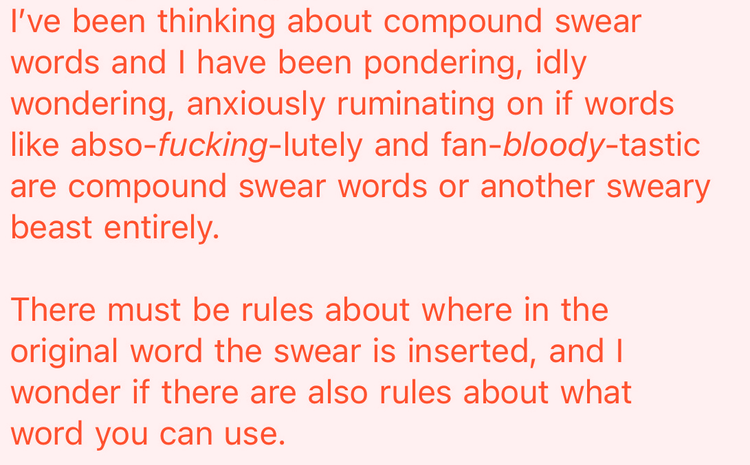
Meanwhile in styleIf you thought we were finished with compound swear words, I’m sorry/delighted to say we abso-fucking-lutely are not. 😎 Last week, I got an email from Certified Friend of Adverbs™ and Actual Author, Jay Chesters, musing on the following:
|
|
Luckily, I recently read linguist John McCarthy’s 1982 paper on this very topic* — which is not compound swear words but expletive infixes. We know that prefixes (unhappy) go at the beginning of words, and suffixes (happiness) stick on at the end. Some languages, like Arabic and Tagalog, also use infixes, which snuggle up inside a word. English has only one common kind of infix: swearing.
|
|
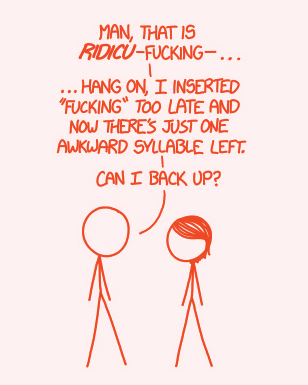
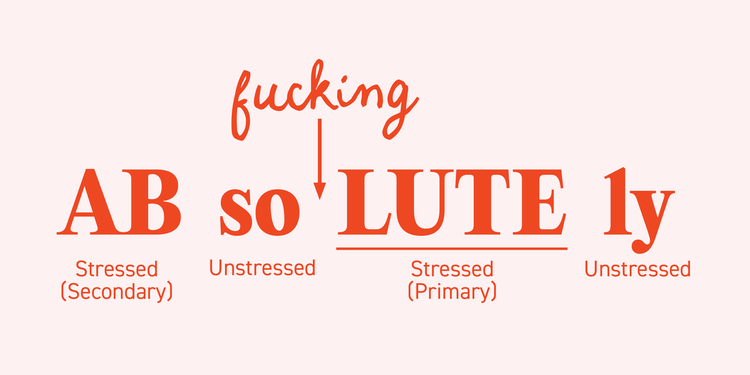
And Jay’s right! We have surprisingly strict rules about where an infix can go. Most of us follow them intuitively: the word needs two or more syllables, and the swear word slides in right before a stressed syllable. That’s why abso-fucking-lutely works so well. There are stressed syllables and (crucially!) a convenient gap before one of them. This also explains why two-syllable words with the stress on the second syllable (ho-fucking-tel) work well, but those with first-syllable stress (like monkey) don’t: no parking spot for the expletive. Fan-bloody-tastic stuff.
|
|
* I highly recommend reading this, if only to see the word ‘Du-fuckin-brovnic’ referred to as a ‘well-formed specimen’.
|
Meanwhile in readingI’ve been back at work this month, which means much less reading than I can get away with on holidays. However, I did have time for my spine to be chilled by Edith Wharton’s outrageously effective short story A Bottle of Perrier and sink my teeth into my book of the month:
|
|

|
Lost in Work: Escaping CapitalismThis month, I finally got around to reading Amelia Horgan’s Lost in Work: Escaping Capitalism. While it’s little dense and tonally inconsistent, it’s still essential reading for anyone who instinctively feels like the working world is somehow getting worse (spoiler: it measurably is). A perfect present for any family member who needs a little radicalising. ✊ |
|
|
|
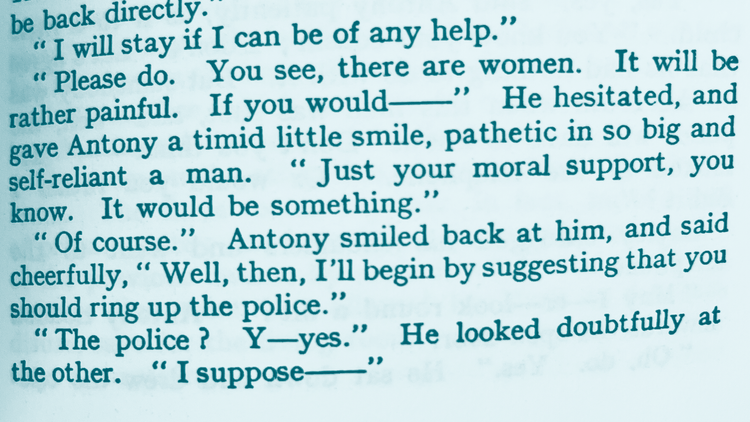
Hectic punctuationRereading my copy of the Red House Mystery by AA Milne (yes, that AA Milne), I noticed that his em dashes are absolute units. So much so that I started reading them as ellipses. Typesetters take heed!
|
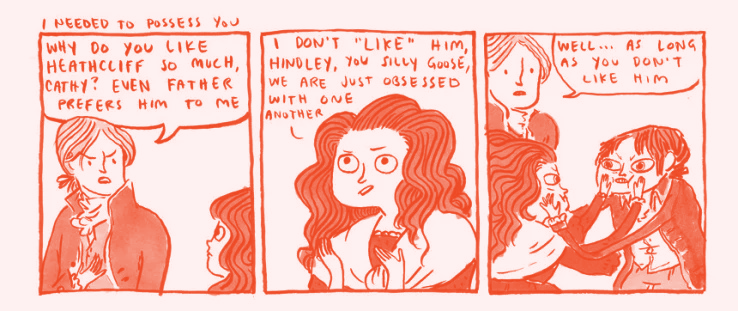
Wuthering HeightsSay what you will about the new Wuthering Heights movie, at least we didn’t have to pretend to care what Joseph was saying. Also: giant strawberry. There have been plenty of thoughtful reflections on the failings of this extremely silly movie, but beyond Kate Bush’s masterpiece, no piece of Blithering Heights media will ever be as important as this one.
|
Meanwhile onlineThank you to the somatic genius Shannon Palmer for sending me this amazing new font (vive la résistance!) Also wonderful this month was the launch of Riddance.ai, an AI education platform about ‘AI and media literacy, the impact of AI media, and how to figure out what’s real on the Internet.’ Much needed, unforch. Finally, Etymology Nerd on she ebbin on my neezer til I scrooge.
|
Meanwhile in artThis month’s adverbial coda is mistily, illustrated by the talented Tristan Souchon, who knows more about heraldic design than anyone I know. Gradually and mistily it became apparent that the Most Ancient One was holding something—some object clutched in the outflung folds of his robe... — HP Lovecraft
|
That’s all for FebruaryThanks for reading Meanwhile in February! If you were sent this and fancy subscribing, you can do so below — feel free to share it far and wide or keep it squirrelled away just for you. I’ll see you in March. 🫶
|
|
|
|