|
Any wonderful unexpected thing. ͏ ͏ ͏ ͏ ͏ ͏ ͏ ͏ ͏ ͏ ͏ ͏ ͏ ͏ ͏ ͏ ͏ ͏ ͏ ͏ ͏ ͏ ͏ ͏ ͏ ͏ ͏ ͏ ͏ ͏ ͏ ͏ ͏ ͏ ͏ ͏ ͏ ͏ ͏ ͏ ͏ ͏ ͏ ͏ ͏ ͏ ͏ ͏ ͏ ͏ ͏ ͏ ͏ ͏ ͏ ͏ ͏ ͏ ͏ ͏ ͏ ͏ ͏ ͏ ͏ ͏ ͏ ͏ ͏ ͏ ͏ ͏ ͏ ͏ ͏ ͏ ͏ ͏ ͏ ͏ ͏ ͏ ͏ ͏ ͏ ͏ ͏ ͏ ͏ ͏ ͏ ͏ ͏ ͏ ͏ ͏ ͏ ͏ ͏ ͏ ͏ ͏ ͏ ͏ ͏ ͏ ͏ ͏ ͏ ͏ ͏ ͏ ͏ ͏ ͏ ͏ ͏ ͏ ͏ ͏ ͏ ͏ ͏ ͏ ͏ ͏ ͏ ͏ ͏ ͏ ͏ ͏ ͏ ͏ ͏ ͏ ͏ ͏ ͏ ͏ ͏ ͏ ͏ ͏ ͏ ͏ ͏ ͏ ͏ ͏ ͏ ͏ ͏ ͏ ͏ ͏ ͏ ͏ ͏ ͏ ͏ ͏ ͏ ͏ ͏ ͏ ͏ ͏ ͏ ͏ ͏ ͏ ͏ ͏ ͏ ͏ ͏ ͏ ͏ ͏ ͏ ͏ ͏ ͏ ͏ ͏ ͏ ͏ ͏ ͏ ͏ ͏ ͏ ͏ ͏ ͏ ͏ ͏ ͏ ͏ ͏ ͏ ͏ ͏ ͏ ͏ ͏ ͏ ͏ ͏ ͏ ͏ ͏ ͏ ͏ ͏ ͏ ͏ ͏ ͏ ͏ ͏ ͏ ͏ ͏ ͏ ͏ ͏ ͏ ͏ ͏ ͏ ͏ ͏ ͏ ͏ ͏ ͏ ͏ ͏ ͏ ͏ ͏ ͏ ͏ ͏ ͏ ͏ ͏ ͏ ͏ ͏ ͏ ͏ ͏
Hello there!If you’re new, welcome. If you’ve been here before, yay. ☺️ Despite being physically wrecked by what I can only assume are Wrist Fevers, I’m feeling unbelievably fizzy. Perth air is thick and redolent in warm weather, so I’ve been sniffing up a storm on my daily rides to purchase steroid creams with which to slather my vile form. In October any wonderful unexpected thing might be possible. ― Elizabeth George Speare
October sadly started with the passing of Adverbs Hero(rat) Jane Goodall. Yet through her death, we’ve learned the wonderful, unexpected fact that she, too, dreamed of launching Musk, Trump, Netanyahu, et al. into the sun. If nothing else, these sad times have a beautiful way of bringing us together. RIP, legend.
|
Meanwhile in writingWhen I’m in the shower, I like to imagine I’m stuck on an island and can only leave after passing an impossible memory test. One is to recite the lyrics to Janis Joplin’s Cry Baby, including the mumbly bits (aahoneywelcomebahahackhoome). Another is to list all the definitions of the most-defined word in English: run. This tiny word has a brain-bonking 645 unique meanings, and I like to imagine myself — 18 years into my internment, fully bearded, with crispy, cerise skin — shrieking out my final definition:
|
run /rʌn/ v.To migrate in large shoals! Like the fish I’ve been feasting on in my island prison.
|
|
Suffice to say, English is getting its money’s worth out of run. If you’re ever wading through entries seeking the ‘main’ definition of a word, good news: dictionaries are carefully ordered. A modern dictionary (like Macquarie) starts with the most common use, and a historical one (like the OED) begins with the oldest. So if you want today’s most common definition of run, Macquarie’s first entry is the place to look. It’s roughly this:
|
run /rʌn/ v.To move quickly on two feet, faster than walking but slower than sprinting. Allegedly ‘good for you’.
|
|
Dictionary news rarely escapes its bubble, but I’ve been sent Merriam-Webster’s new AI announcement nine times — proof it remains the People’s Princess of dictionaries. 💅
|
Meanwhile in styleCecelia Watson ‘used to feel that her love for English was best expressed by means of irritation at the sight of a misplaced apostrophe’. If that rings true for you, prepare to be appalled. Because apostrophes — which we’re told are only ever for possessives and contractions — can signal plurals.
|
|
I KNOW. I know. We all learned the rule, and once we knew it, we got to laugh smugly at greengrocer’s apostrophes on sign’s offering CD’s and book’s for sale. But like most ‘rules’ in English, this one has footnotes. Most style guides quietly recommend apostrophes to pluralise single letters and some numerals. Straight A’s is easier to read than straight As, which could be confused with the preposition ‘as’. The same goes for pluralising numerals: 1’s and 2’s. The apostrophe creates a clear visual separation between the letter or numeral and the plural-signalling ‘s’.
|
|
Once you’re familiar with this use of apostrophes, you’ll understand why people are drawn to adding them to plural words. The word taxis might look odd to an unfamiliar reader, so in goes an apostrophe to mark the plural. In separating the familiar word from the pluralising ‘s’, the writer is just trying (like all of us!) to be understood.
|
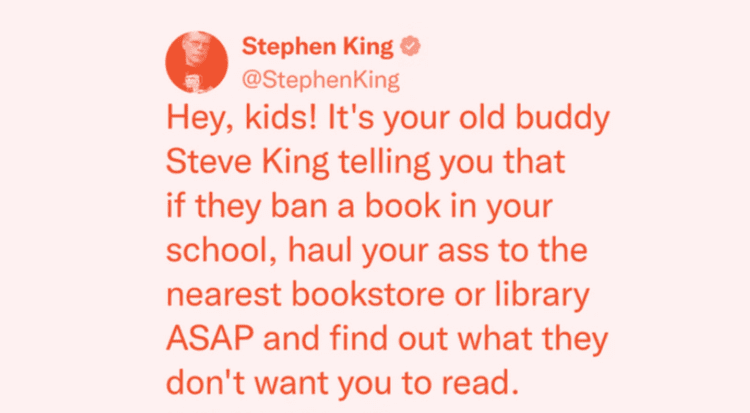
Meanwhile in readingIf you need a theme for your October reading, it’s currently Banned Books Week. Books are being increasingly challenged in Australia, particularly when they relate to LGBTQIA+ people and sexuality in general. Prisons are particularly pernicious censors, but book banning is Bad News™ for everyone — the erosion of anyone’s freedom of expression is a threat to everyone else’s. I never thought I’d say this, but listen to Stephen King.
|
|

|
Brave New WorldMy book of the month is Aldous Huxley’s Brave New World, which was banned in Australia from 1932–37. A sterling example of censors confusing description with endorsement, it was rejected for being anti-religious and anti-family (while being v evidently the opposite). Brave New World contains one of literature’s hardest-working adverbs, and unlike those nerd censors, I think Australians have a right to read about twelve buttocks ~slabbily resounding~. 🍑 |
|
|
|
Short storiesI recently experienced Tom Wolfe’s The Kandy-Kolored Tangerine-Flake Streamline Baby, a 1960s collection of essays on US subcultures. I find Wolfe’s writing both appealing and highly unpleasant. On one hand, I’ve got a soft spot for chaotic mechanical choices, and it doesn’t get much more bananas than the full title of the collection’s titular essay:
|
|
And Wolfe has moments of real insight, like recognising in LAS VEGAS (What?) LAS VEGAS (Can't hear you! Too noisy) LAS VEGAS!!!! that the city was designed for men nostalgic for the glamour they couldn’t afford when they were 25 years younger. But mostly, he’s just a bit of a tosser (confirmed by his editor Byron Dobell, who called him ‘anti-Semitic, subtly, anti-black, subtly, and anti-gay, not so subtly’). Add sexist to that list. Worth a read if you want to form an opinion of the inventor of the idiom ‘pushing the envelope’ (not a joke — he literally coined it).
|
Meanwhile in teachingSomething I see a lot in my copywriting students’ work is the dreaded academic voice. Despite its supposed aims of impartiality, authority and clarity, academic voice usually ends up being almost impossible to understand: Being incomprehensible offers unparalleled protection against having nothing to say. — Alain de Botton
It’s not my students’ fault — they’ve been trained to write this way since high school. But at best, academic voice doesn’t care about communicating clearly with its audience; at worst, it’s actively hiding something (an opinion, outcome, connection, etc.). And it’s a shockingly difficult habit to break.
|
|
You don’t have to follow the tropes of academic voice to create successful ‘formal’ writing. Here’s how you can help readers understand your writing without losing its professional lustre: Are you using too many words? Try making your point aloud without looking at your sentence. You’ll usually find your spoken phrasing is clearer. Can you make it active (‘I ate the cake’) instead of passive (‘the cake was eaten’)? Your readers will thank you for knowing who’s doing what. Could a marathon sentence be split into smaller, friendlier ones? Is that acronym really earning its keep? If you’re only using it once or twice, it’s probably easier to just spell it out.
|
Meanwhile in songBefore radio ruins it, let’s talk about Where’s My Husband!, Raye’s deadset banger featuring her grandma and an unexpected exclamation mark. Lately online, I’ve been seeing excited, confused and exasperated questions ending with ! instead of ?. It works because we generally recognise questions by their words; the punctuation’s job is to supply the tone. This exclamation mark tells us Raye’s question isn’t pensive, but it’s not rhetorical either (the usual exception to questions ending in !). She’s frustrated and wants her man! While not standard, this trend is a lovely example of how we can (and always will) adapt punctuation to read more like how we speak. And of course, it can go missing altogether when we want our questions to sound flatly disbelieving or mocking — something required more and more often in this particular news cycle. 🥴
|
That’s all for SeptemberThanks for reading Meanwhile in October! If you were sent this and fancy subscribing, you can do so below — feel free to share it far and wide or keep it squirrelled away just for you. I’ll see you in November. 🫶
|
|
|
|