This story and more silliness live in my (usually) monthly newsletter, Meanwhile. You can subscribe right here.
Hello there!
I hope you’re doing well. I’m popping into your inbox because I saw the new Maybelline tagline and just about lost my mind. Let’s talk about it.
Here’s the OG:
Maybe she’s born with it.
Maybe it’s Maybelline.
We know it, we love it, it’s great! It’s been around for almost as long as I’ve been alive, and it’s done a hell of a lot more work than I have in those 36-odd years.
As well as lodging itself in everyone’s heads, the original tagline was a cute, catchy and memorable nod to what Maybelline offered: the chance to be seen as naturally beautiful, successful, confident, etc., even if you hadn’t always felt that way. It was a playful, knowing wink, inviting people into Maybelline’s brand world.
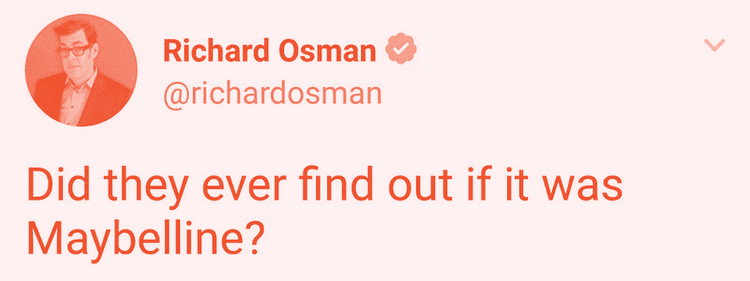
It was a classic tagline from the era of damn fine taglines, and it was doing its job, namely, keeping Maybelline in people’s noggins and giving the brand some emotional meaning.
God forbid. Here’s the new one:
Maybe. We’re born with it.
Maybe. It’s Maybelline.
!!
??
Lol.
What. Is going on?
Now we’ve had a moment to recover, let’s talk about the positive. Singular. ‘We’re born with it.’ The we is good! Makeup is for everyone, and has been since around 3000 BC, when the Ancient Egyptians invented cat-eye eyeliner (for which we are forever grateful). Inviting more people into the fold is a lovely idea. The phrase still doesn’t work quite as well as the original — we’re unlikely to wonder whether we ourselves were born with something — but the intentions are sound.
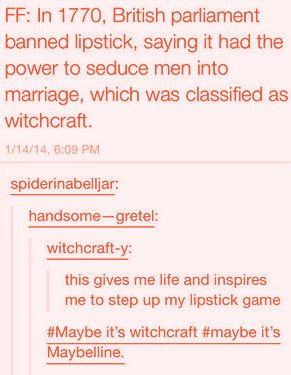
The full stops
That singular positive, however, does little to make up for the horrors wreaked by those two new full stops.
Full stops mean something. They create a pause and mark the end of a sentence. In the original tagline, they created necessary space between the setup and the punchline, performing a conventional linguistic function that everyone understands. Stunning.
The full stops after ‘Maybe’ turn a single question-and-answer unit into four separate sentences, two of which are a single word. And for what? Apparently — and this is truly mind-boggling — because the ‘maybes’ were ‘…giving ambiguity — it was more of a question.’ 💀
The rationale
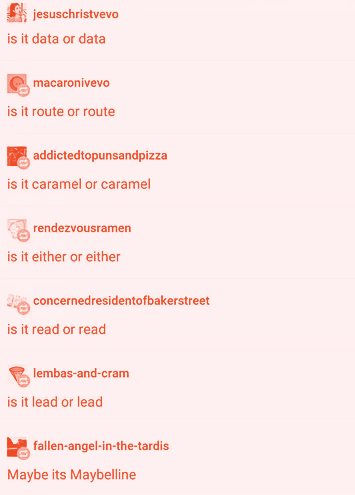
Fortunately, Maybelline has been kind enough to explain itself. After reading the brand’s v funny and humiliating press release, my biggest takeaway is that, somehow, these presumably very well-paid people have no idea how branding works. It starts:
For more than three decades, "Maybe she's born with it" posed a question about one woman's beauty.
A powerfully myopic take on the old, beloved tagline — and one that doesn’t give the brand much room to gracefully revert when they realise what a flop the new one is. It also seems to miss the function of ‘she’ in the original: it’s a pronoun that lets us imagine ourselves in someone else’s place, or picture someone we know. But this would be fine if the new tagline was equally literal. And yet:
The reimagined 'Maybe.' is a statement about every woman, and everything she can become. A single period transforms a question into a declaration of infinite possibility…
This is what the full stops were for? To create a ‘Maybe.’ statement? A ‘Maybe.’ statement, replacing the tagline that was apparently ‘giving ambiguity’? Dismissing the original with such a literal interpretation and expecting people to find meaning in this total abstraction is … a choice.
…while the change from "she's" to "we're" extends its meaning from one woman to all women.
And, after my good-faith defence, it turns out the ‘we’ isn’t even inclusive. We’re still only talking about women.
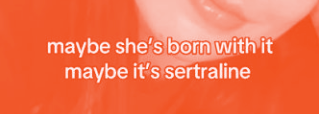
The rest
With all the (reasonable) fuss over the ‘Maybe.’s in isolation, you’d be forgiven for letting the rest of the tagline slide. But let’s also look at the other two sentences:
We’re born with it.
It’s Maybelline.
In the original tagline, ‘it’ was undefined — the audience supplied the meaning. You see this in other wildly successful taglines, like:
Just Do It
I’m Lovin’ It
Because You’re Worth It
Lovely stuff. But because of the new structure, ‘it’ now refers back to ‘maybe’ in both sentences. And that’s causing a whole lot of trouble.
The first sentence — We’re born with it — is a mess when it comes after ‘Maybe.’. How are we born with ‘maybe’, exactly? Sure, you can replace ‘it’/‘maybe’ with Maybelline’s definition of ‘infinite possibility’, but you’d need to have read the press release first. Not ideal.
The second sentence — It’s Maybelline — is in even worse shape. It now suggests that ‘maybe’ is Maybelline, leaving the poor copy team contorting themselves to justify it with freakshow headlines like ‘Maybe. is in our DNA.’ 🤪
Creative teams can explain these things until the cows come home, but if your tagline needs supplementary literature to make sense, you’ve got a problem.
What. Next?
I haven’t mentioned how Miley Cyrus is involved in all this or The Beauty of Infinite Possibility (which sounds, you can’t convince me otherwise, like the name of a cult). Suffice to say, it’s a catastrophe. Maybelline has taken one of the most recognisable taglines in advertising and replaced it with something nobody will remember once we’ve all finished snickering at it. And as (genuinely) funny as it is, I’m feeling a little haunted by what looks like a ghost of ad-copy future.
But Maybe. none of that matters to Maybelline. At the moment, much of the paid media is singing lustily from their PR hymnbook, and as Beloved Friend of Adverbs™ Luke Robinson of Ale of a Time says:
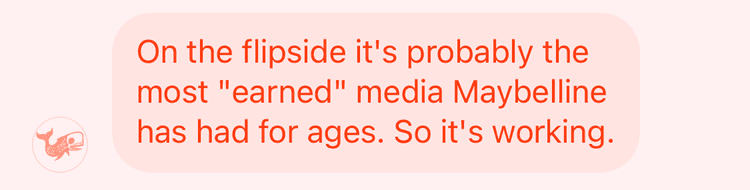
Depressing stuff, but he’s not wrong. After all, I’m sitting here, writing this, and you’re here reading it. But perhaps we may summon the jolly ghost of ad-copy future. Something else might come out of Maybelline’s goofiness — new eyes on old copy, a renewed love of wordplay, more respect for our audiences or just a little more appreciation for good taglines and the energy to write them. Maybe? Maybe. Here’s hoping. ✨